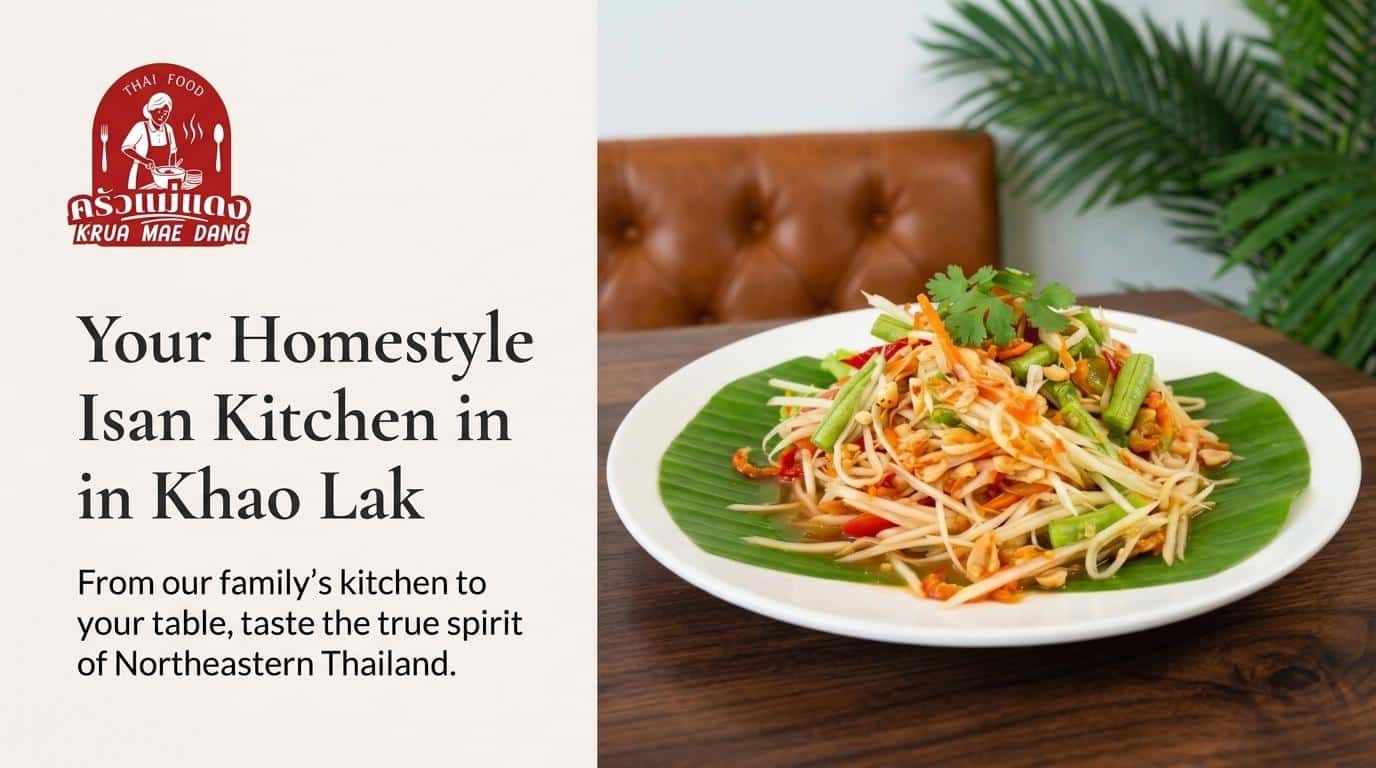
So, you know Pad Thai, you’ve probably had a green curry…but Isan food? That’s a whole other level of Thai food, wonderfully untamed, much more in your face, and completely entwined with how people actually live in the area.
If you want to know how to eat Isan food without being overwhelmed when you’re faced with a table full of it, you’re in the right place! This is a relaxed, helpful guide to getting Isan (Northeastern Thai) food right, and it’s particularly for those first-timers in lovely Khao Lak who want to eat confidently and show the food respect. Before you even think about ordering, here’s what you need to know.
Key Takeaways Before You Order
This is for travellers, expats, anyone curious about the lively world of Isan food and wanting to understand it before they choose. The flavours are incredibly strong, the dishes are meant to be eaten together (not on their own!) and sticky rice is your key tool – you use your hands to shape it.
Ultimately, Isan food is a very friendly, sharing experience of spicy, sour, and smoky tastes, and it’s best when you enjoy all those things at once.
What Is Isan Cuisine and Why Does It Feel So Different?
What is Isan cuisine and why does it feel so different?
It’s from the countryside, the vibrant Northeast of Thailand. It’s famous for flavours that don’t hold back – really spicy, powerfully sour, very salty, smoky, and full of fresh, earthy herbs. Unlike the richer, coconut-y and sweeter dishes from Central Thailand, Isan food is wonderfully direct and incredibly zingy. It’s built from the ground up, tied to a tradition of eating together where every meal is a celebration of tastes that contrast with each other.
That unmistakable “kick” in Isan food comes from a brilliant mix of strongly flavoured fish sauce, zingy lime, and seriously hot chillies. It uses a lot of toasted rice powder for a lovely nutty texture, fermented ingredients for a really deep savoury flavour, and heaps of fresh mint, coriander and Thai basil from the garden. And when you add the charred, smoky smell of barbecued meat, you get a flavour that wakes up your mouth and stays with you.
How to Eat Isan Food Like a Local
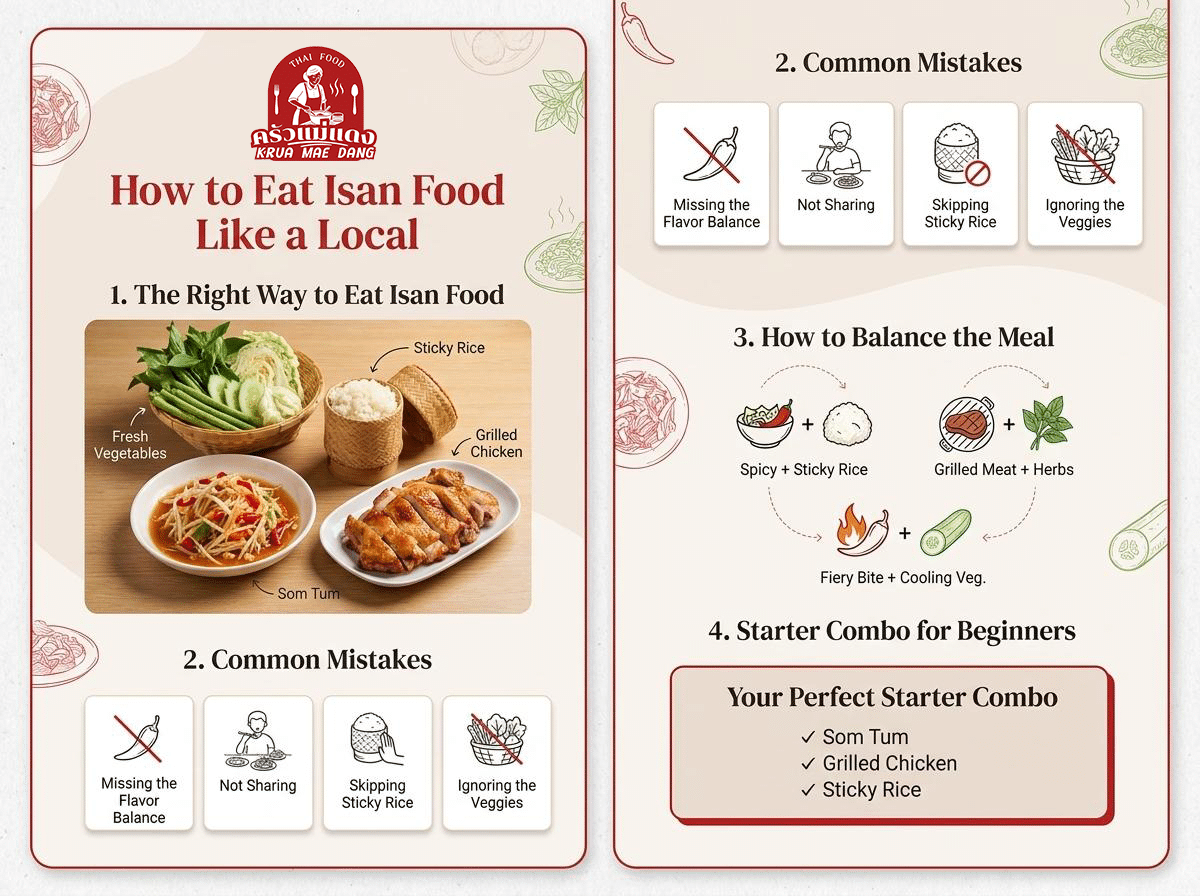
You’ll hardly ever see a Thai person having a single plate of Isan food; these meals are designed to be served to the whole family. The best part is in the centre of the table, and it’s about putting different things together. It’s the way a hot, sour soup goes with a cool herb, or a spicy salad is calmed by a mouthful of tasty grilled pork – that’s what makes the meal feel finished.
Actually eating Isan food like a local isn’t just about pointing at the menu, it’s about understanding how to mix, taste and balance each mouthful. Locals have a rhythm to their eating: a little bit of rice, a spicy bite of salad, a savoury bit of meat, and a cool, crunchy piece of raw cabbage or cucumber. By swapping between the spicy, the smoky, the filling and the fresh, you get a thrilling flavour ride that keeps your mouth interested, but doesn’t overwhelm it.
Start with the Classic Combination
If you’re a bit nervous, the easiest way in to this food world is the famous Som Tum Gai Yang combination. This classic of spicy green papaya salad, smoky grilled chicken, and a basket of warm sticky rice is perfect because they all balance each other out. The chicken’s lovely, rich juices calm the salad’s sharp heat, and it’s a pretty safe bet for anyone starting out.
The Role of Sticky Rice and Pace
A quick guide to Thai sticky rice: forget the fork and use your hands. People traditionally pinch off a small amount of sticky rice, roll it into a tidy ball with their fingers, and use it to scoop up sauces or follow something spicy to take the edge off. It’s practical, a nice way to show respect for the culture, and really fun to eat with!
Isan dining is a marathon, not a sprint, meaning food is rarely eaten in large, single-item mouthfuls. Instead, pace yourself by eating in small, carefully composed bites. Go slowly, and with each bite, make sure you have a little bit of everything. How about a bit of fiery salad, then some smoky meat, and to calm things down, a little basil or a slice of cooling cucumber before you go for the next bite?
The Dishes Every First-Timer Should Know
If you’re new to Isan food, it’s far more helpful to understand what each dish does for the meal, rather than just what it’s called. Here’s a little help to get you started:
- Som Tum (Papaya Salad) is the zingy, spicy, crunchy centrepiece, bringing a lovely sharpness and heat.
- Gai Yang (Grilled Chicken) is lovely and savoury—a soothing contrast to the strong flavours of the salads.
- Khao Niao (Sticky Rice) is the chewy, filling base of the meal; use it to pick things up and ease the strong flavors on your stomach.
- Larb is a warm salad of minced meat with fresh herbs, lime, fish sauce, and a sprinkling of toasted rice powder.
- Nam Tok is similar to Larb, but made with sliced and grilled meat (typically pork or beef), which makes it juicier and smokier.
- Jeaw are little pots of very potent sauce (chilli and tamarind) to give grilled meat a real punch.
- Fresh Vegetables and Herbs (cabbage, Thai basil, long beans) are served on the side; you need these to cool your mouth and offer a fresh, crisp contrast.
Ordering Isan Food in Khao Lak
In Khao Lak, if you want a simple introduction to Isan food, ordering is a big part of it! A really good first meal will have a refreshing salad, something comforting and grilled, a basket of sticky rice, a dish with lots of herbs and meat, and a plate of those fresh vegetables. It’s a wonderful way to get a flavour of the region without being overwhelmed.
Best Set for 1–2 People
Keep it simple and go for the classics. Order one serving of Som Tum (don’t hesitate to ask for “mai pet” – not too spicy!), a portion of Gai Yang, a sticky rice basket to share, and maybe a light, savoury soup to drink alongside it.
Best Set for a Group (3+ People)
When you’re with three or more people, an Isan meal really comes into its own. Order both Som Tum and a meat salad like pork Nam Tok, a generous portion of grilled chicken, lots of sticky rice, and a variety of Jeaw. It’s so much more fun to explore all the different tastes as a group, and you can all find your own perfect combination.
Common Mistakes Beginners Make
Trying a new cuisine always has its difficulties! Here are the most common mistakes people make when starting with Isan food:
- Braving ‘Thai spicy’ and realizing they’ve bitten off more than they can chew.
- Treating each dish as a meal on its own (like demolishing a whole plate of Larb) rather than sharing.
- Leaving out the sticky rice entirely!
- Ignoring the complimentary basket of raw vegetables, which are crucial for bringing the whole meal together.
Why Isan Food Becomes Addictive
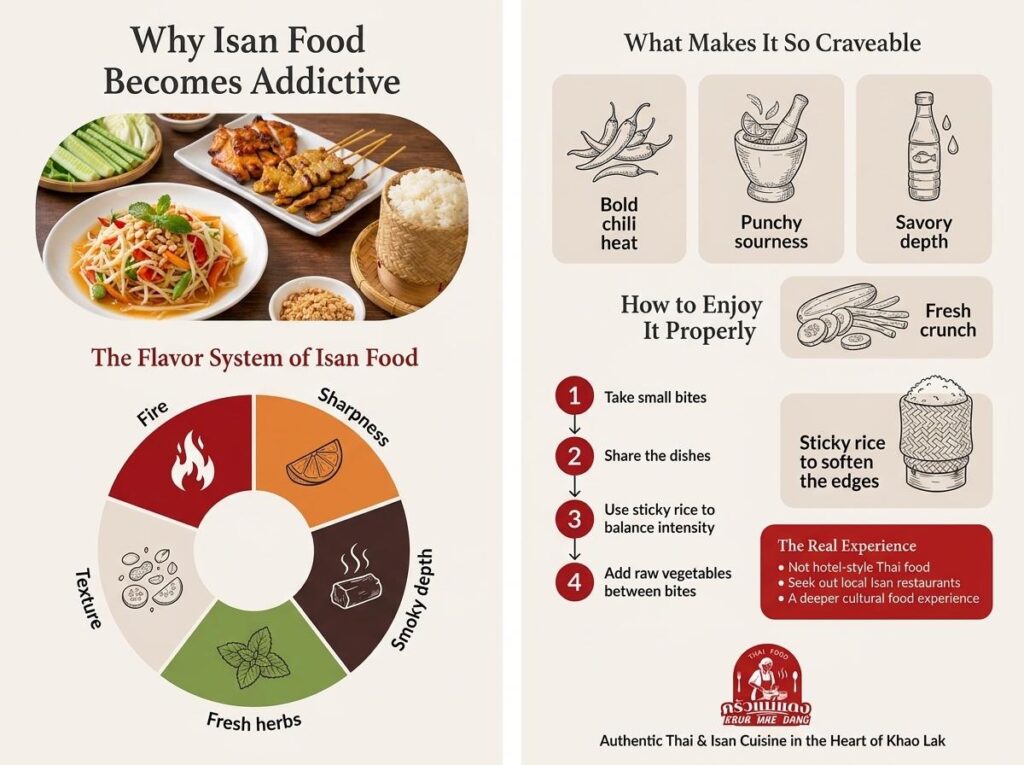
Isan food, once you ‘get’ how its brilliant mix of fire, sharpness, smoky depths, lots of fresh herbs, and different ways things feel in your mouth all work together, isn’t something you just order…it’s something you’ll suddenly crave all the time. You’ll find it wonderfully comforting when you learn to eat it slowly, and let the sticky rice calm the strong tastes.
Then, a simple meal at a roadside stall is a totally brilliant, memorable experience. While many travelers in Thailand order bland, adjusted versions of Thai food at their hotel, Khao Lak is a great place to wander a little further and really experience the food of the area.
You’ll find Isan restaurants away from the busiest tourist spots, connecting you with the true, rough-around-the-edges flavours that Thai families enjoy. This will turn your beach vacation into a much deeper, more immersive cultural trip. For the full history of Krua Mae Dang: History of Krua Mae Dang
Frequently Asked Questions and Summary
What is Isan food?
It’s the exciting cuisine from Northeastern Thailand: think zesty, spicy salads, grilled meats, sticky rice, heaps of fresh herbs, and a really strong, salty-sour taste. It’s often much more intense and earthy, and definitely not as sweet as the coconut and curry dishes you get in the middle of Thailand.
How to start with Isan food?
Start with something easy: som tum, grilled chicken and sticky rice. Take small bites, and use rice and fresh vegetables to balance the hotter dishes. Don’t hesitate to ask the kitchen to make it less spicy while you’re getting used to it!
Best first dish?
Som tum with grilled chicken and sticky rice, without a doubt. These three are the core of Isan food and work together in perfect harmony.
Do you eat sticky rice with your hands?
Yes, you absolutely do! You eat sticky rice with your fingers, in small rolled-up bits. It’s brilliant for picking up little pieces of grilled meat or soaking up the spicy, tangy dressings from the salads.
Is Isan food always incredibly spicy?
Not always, but it’s generally fairly bold and chili-forward. Almost all the salads can be adjusted to your spice level. The sticky rice and fresh vegetables are always there to take the edge off the fierier tastes.
Summary
Ultimately, spending a little time finding out how to eat Isan food makes the whole experience more pleasant and easy to enjoy. Don’t think of the menu as separate dishes, but as something to enjoy in terms of how things combine, how the flavours are balanced, and the fact that you’re sharing it. Approach your table with a willingness to try things, not fear of the heat! It will easily become one of the most delicious and memorable meals of your whole Thailand adventure.